

Few dental terms make people flinch quite like “root canal.” For most patients, the words bring up images of pain and long hours in the chair. The reality, though, is far gentler than the reputation. A root canal is one of the most effective ways to save a natural tooth that would otherwise have to be removed — and with today’s technology, it’s usually no more uncomfortable than getting a filling.
If you’ve been told you need a root canal, or you’re dealing with a stubborn toothache and trying to understand your options, this guide walks you through everything: what the treatment actually involves, how much it costs in Kochi, how long recovery takes, and how to know when it’s time to see a specialist.
What Is a Root Canal Treatment?
Inside every tooth is a soft core called the pulp, made up of nerves and blood vessels. When deep decay, a crack, or repeated dental work allows bacteria to reach this pulp, it becomes infected or inflamed. That’s what causes the throbbing, lingering pain so many people associate with a “bad tooth.”
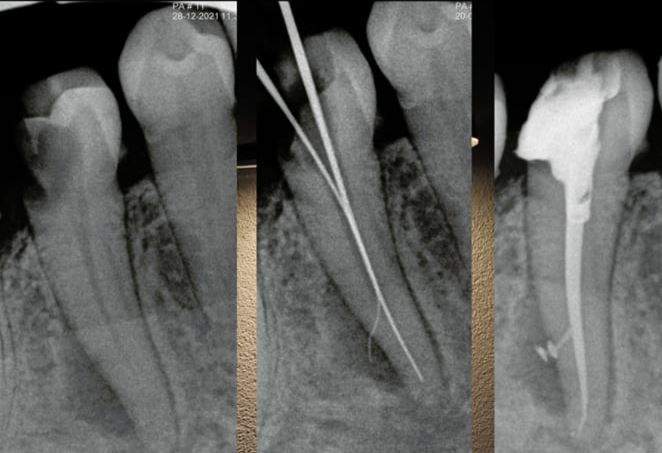
A root canal treatment (also called endodontic treatment) removes the infected pulp, cleans and disinfects the inner channels of the tooth, and seals them to prevent reinfection. The outer tooth stays exactly where it is. In simple terms, instead of pulling the tooth out, we clean out the problem from the inside and keep your natural tooth working for years to come.
Signs You Might Need a Root Canal
Not every toothache means a root canal, but certain symptoms are strong indicators. It’s worth getting checked if you notice:
- Sharp or throbbing pain when biting or chewing
- Lingering sensitivity to hot or cold, even after the source is gone
- A pimple-like bump or swelling on the gum near a tooth
- Tenderness or swelling in the surrounding gum
- A tooth that has darkened or changed colour
- Pain that wakes you up at night
Sometimes there’s no obvious pain at all — an infection can be quietly developing and only show up on an X-ray. This is exactly why regular check-ups matter, and why a proper diagnosis (often with a 3D CBCT scan for complex cases) is the first step rather than guessing.
The Root Canal Procedure: Step by Step
Understanding what happens during treatment takes a lot of the fear out of it. Here’s how the process usually unfolds at a specialist clinic:
-
Examination and diagnosis.
Your dentist examines the tooth, takes an X-ray or 3D scan, and confirms whether the pulp is affected and how far the infection has spread.
-
Numbing the area.
Local anaesthesia is applied so that the tooth and surrounding area are completely numb. For anxious patients, sedation options can make the experience even calmer.
-
Cleaning the canals.
A small opening is made in the top of the tooth. The infected pulp is removed, and the inner canals are carefully cleaned, shaped, and disinfected.
-
Filling and sealing.
The cleaned canals are filled with a biocompatible material and sealed to keep bacteria out.
-
Restoring the tooth.
Because a treated tooth can become brittle, it’s usually capped with a dental crown to restore full strength and function. This is an important final step — skipping the crown is one of the most common reasons a root-canal-treated tooth fails later.
Many root canals are completed in a single sitting, while more complex or heavily infected teeth may need two visits to allow the infection to settle.
How Much Does a Root Canal Cost?
Cost is usually the first question people ask, and it’s a fair one. The honest answer is that it depends on the tooth and the complexity of the case — but here’s a realistic picture of what to expect in Kochi.
A root canal on a front tooth is generally the most affordable, as it has a single canal. Premolars have one or two canals, and molars (your back chewing teeth) have three or more, making them more involved and slightly more expensive. As a rough guide, root canal treatment typically ranges from around ₹4,000 to ₹12,000 per tooth, depending on the tooth type and difficulty.
The main factors that affect your final cost include:
- Which tooth is being treated (front teeth cost less than molars)
- The number of canals and the complexity of their shape
- Whether it’s a first-time treatment or a re-treatment of a previously done root canal
- The crown is placed afterwards, which is a separate cost and varies by material (metal, ceramic, or zirconia)
- Any additional diagnostics, like a 3D CBCT scan for difficult cases
When you add a crown, the total investment for saving the tooth is usually higher — but it’s still far more economical than extraction followed by an implant or bridge later on. Because every mouth is different, the best way to get an accurate figure is a quick consultation where the tooth can actually be examined.
A note on price: The figures above are general market ranges to help you plan. For an exact quote based on your specific tooth, it’s best to confirm directly with the clinic.
Does a Root Canal Hurt?
This is the myth worth busting. The pain people associate with root canals usually comes from the infection, not the treatment. The procedure itself relieves that pain.
With modern anaesthesia, most patients feel little more than mild pressure during treatment. Afterwards, some tenderness for a day or two is normal and easily managed with over-the-counter pain relief. For patients who feel nervous, sedation makes the whole experience relaxed and comfortable. In most cases, people are surprised by how routine it turns out to be.
Recovery and Aftercare
Recovery from a root canal is usually quick. Most people return to their normal routine the same or the next day. To help your tooth heal well:
- Avoid chewing on the treated side until the permanent crown is placed
- Stick to softer foods for the first day or two
- Keep up gentle brushing and flossing around the area
- Take any prescribed medication as directed
- Attend your follow-up to have the crown fitted
Once restored with a crown, a root-canal-treated tooth can last a lifetime with good oral hygiene and regular check-ups.
Why Choose Dental Point for Your Root Canal
Root canals are a precision procedure, and experience genuinely matters. At Dental Point in Kadavanthra, root canal treatment is handled with advanced diagnostic tools, careful technique, and a focus on saving your natural tooth wherever possible. Before recommending any extraction, our endodontic team explores whether the tooth can be preserved — because keeping your own tooth is almost always the better long-term outcome.
With a comfortable environment, sedation options for anxious patients, and a team that takes the time to explain every step, the goal is simple: effective treatment without the stress.
Frequently Asked Questions
How long does a root canal take?
A single sitting usually takes between 45 and 90 minutes, depending on the tooth. Complex cases may be spread across two visits.
Is a crown always necessary after a root canal?
For back teeth, a crown is strongly recommended to protect the tooth from fracture. Front teeth may sometimes be restored differently, depending on the case.
Can a root canal fail?
It’s uncommon, but a previously treated tooth can become reinfected. In many cases, this can be fixed with a re-treatment rather than removing the tooth.
Is it better to extract the tooth instead?
Usually not. Saving your natural tooth preserves your bite and jaw structure, and is typically more cost-effective than an extraction followed by an implant or bridge.
How soon can I eat after a root canal?
You can eat once the numbness wears off, but it’s best to favour soft foods and avoid chewing directly on the tooth until the crown is placed.
Book Your Consultation
If you’re experiencing tooth pain or have been advised to consider a root canal, don’t wait for it to get worse. Early treatment is simpler, more comfortable, and often less expensive. Book a consultation at Dental Point, Kadavanthra, and let our team assess your tooth and walk you through your options.
📞 Call +91 97440 20555 or book your appointment online today.